
How to Make Good Coffee at Home: A Beginner’s Guide to Better Mornings
If you’ve ever taken a sip of café-quality coffee and wondered why your kitchen version never quite measures up, you’re not alone. Learning how to make good coffee at home isn’t about expensive machines or rare imported gear, it comes down to a handful of habits that most people simply never learn.
Fresh beans, the right grind, clean water, and a little patience will take your morning cup from forgettable to genuinely excellent. Here’s everything you need to know to get there.
Start With Freshly Roasted Beans
Good coffee begins long before it hits your cup, it starts with the beans themselves. Coffee is a perishable product, and it starts losing its aroma and flavour within weeks of roasting, not months. Check for a roast date on the bag rather than a vague “best before” stamp, and keep in mind that freshness isn’t just about how recently the beans were roasted.
There’s no single resting window that fits every coffee, because different roasts and processing methods peak at different points. Espresso, in particular, needs a few days rest after roasting before it pulls properly, so it’s worth paying attention to timing rather than brewing the moment a bag arrives. Always follow the resting and drinking window your roaster provides for that specific bag.
Buy whole beans, not pre-ground coffee. Ground coffee loses its character within days because more surface area is exposed to air. A whole bean holds onto its oils and aromatics far longer, so grinding just before you brew makes a noticeable difference in the cup.
Storage matters too, especially in a city like Lahore where summer heat and humidity can be brutal on delicate beans. Keep your coffee in an airtight, opaque container away from direct sunlight and heat sources like the stove or a sunny kitchen counter. Skip the fridge or freezer for daily-use beans, condensation is the enemy of good coffee, and constant temperature swings degrade flavour faster than room-temperature storage in a sealed container.
Want to explore your coffee options? Browse our espresso coffee and filter coffee options and find the beans that fit your brew.
Get Your Grind Right
Grind size is one of the most underrated variables in home brewing, and it’s also one of the easiest to get wrong. Too coarse, and your coffee will taste weak and sour because water passes through too quickly to extract enough flavour. Too fine, and you’ll end up with a bitter, over-extracted cup, especially in methods where the grounds sit in water for a while.
Each brewing method has an ideal grind range:
- Coarse — French press, cold brew
- Medium — Drip machines, pour-over (medium-fine for a slower pour-over like a V60)
- Medium-Fine — Moka Pot
- Fine — Espresso
- Extra fine — Turkish coffee
A burr grinder is worth the investment over a blade grinder. Blade grinders chop beans unevenly, producing a mix of dust and chunks that brew inconsistently no matter how carefully you measure. A burr grinder crushes beans to a uniform size, which is the single biggest upgrade you can make if you’re serious about learning how to make good coffee at home.
Water Matters More Than You Think
Coffee is roughly 98% water, so the water you use has an outsized effect on the final taste. If your tap water has a strong mineral taste, a chlorine smellor the hardness common in many parts of Lahore, it’s worth filtering it before brewing. Boiling won’t fix this: it doesn’t correct hardness, so a simple pitcher filter is what actually does the job. Clean, filtered water is the baseline every other step here depends on.
Water temperature is just as important as its quality. For most brewing methods, water between 90°C and 96°C (just off a rolling boil) extracts flavour properly without scorching the grounds. If you don’t have a temperature-controlled kettle, simply let boiled water rest for 30 to 45 seconds before pouring, this is usually enough to bring it into the right range.
Choose a Brewing Method That Suits You
There’s no single “correct” way to brew coffee, the best method is the one that fits your routine and equipment. Here are a few reliable options for home brewing:
- French Press — Simple, affordable, and forgiving. Coarse grounds steep in hot water for about four minutes before being pressed through a metal filter, giving you a fuller-bodied cup with more of the coffee’s natural oils intact.
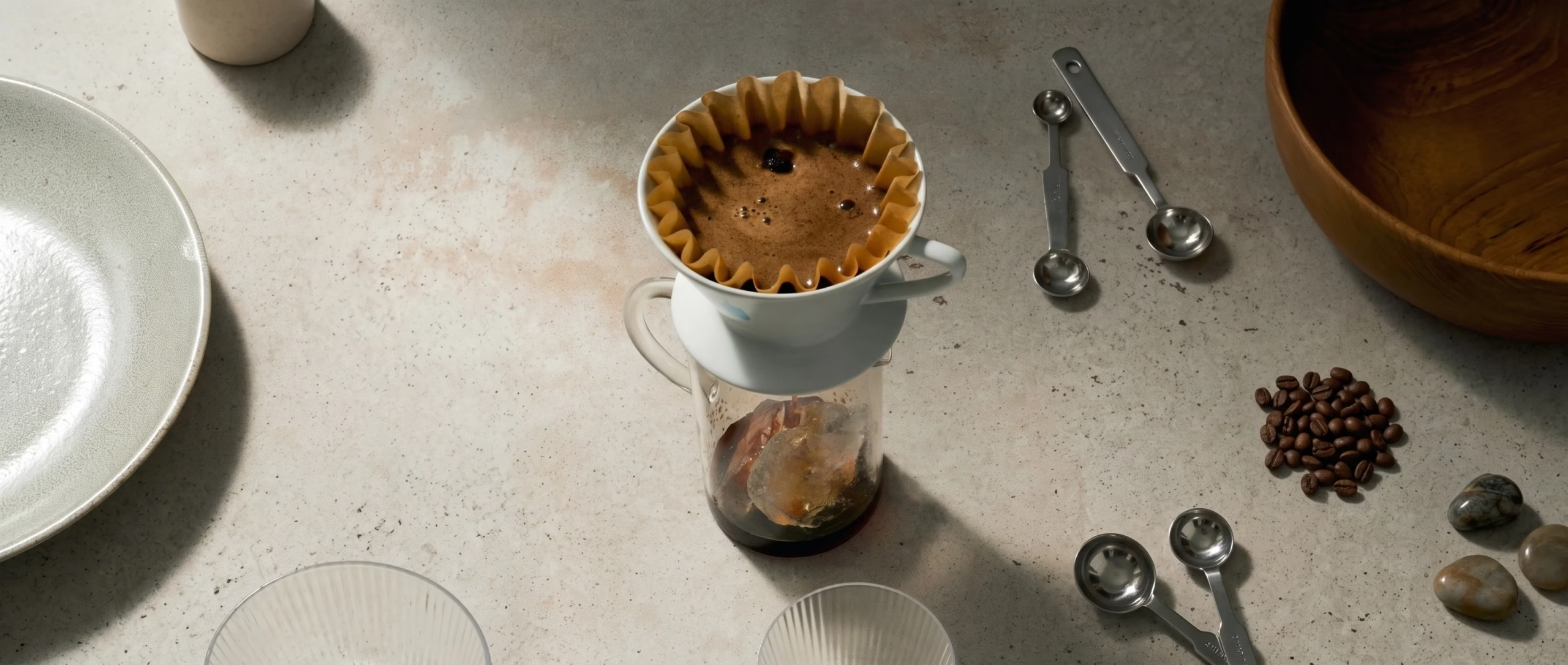
- Pour-Over — A slower, more hands-on method using a dripper and paper filter. It produces a cleaner, brighter cup and lets you control every variable, from pour speed to water distribution, making it a favourite among coffee enthusiasts who enjoy the ritual as much as the result.
- Moka Pot — A stovetop classic that produces a strong, espresso-like brew using steam pressure. It’s a great middle ground for people who want something more intense than drip coffee without investing in an espresso machine.
- Cold Brew — Coarse grounds steeped in room-temperature or cold water for 12 to 24 hours, then strained. Cold brew is naturally sweeter and less acidic than hot coffee, and it happens to be an excellent match for Lahore’s long, hot summers when a cup of hot coffee is the last thing you want.
Whichever method you choose, consistency is what separates an occasional good cup from reliably great coffee every single day.
What We’d Put in Each Brewer
The method is half the answer, the coffee going into it is the other half. Here’s what we’d reach for in every brewer:
Espresso: Agarwood Blend
Full-bodied, with notes of tobacco, vanilla, and dark chocolate. A short shot concentrates everything, so it needs a coffee with that much weight behind it.
Pour-Over: Colombian Flor Del Desierto
Notes of dark chocolate, green apple, and hibiscus. Filter brewing is the only method that gives fruit notes like these room to show up.
French Press: Black Gold Dark Roast
Rich with dark chocolate, cocoa, and fig. Full immersion pulls out more body, which suits a darker roast well.
Cold Brew: Colombia Supremo Washed
Notes of orange, molasses, and milk chocolate. Cold water pulls out less acidity, so a clean washed coffee stays sweet instead of turning bland.
Dial In Your Ratio and Timing
A common reason home coffee falls flat is simply using too little coffee. Start with one simple recipe: 15g of coffee to 250g of water for a single mug, which is more coffee than most people use and is why home cups often come out thin. Weigh the water as well as the coffee instead of estimating by volume, because a kitchen scale gives you a far more consistent result. If needed, adjust to taste: add a little more coffee if it still tastes weak or ease off if it comes out too heavy. Once you know what you like, the same recipe scales up as 60g per litre.
Brew time matters too. Under-extracted coffee (brewed too fast or with too coarse a grind) tastes sour and thin, while over-extracted coffee (brewed too slow or too fine) tastes bitter and harsh. Most methods have a sweet spot: around 4 minutes for a French press, 2.5 to 3.5 minutes for a pour-over, and roughly 25 to 30 seconds for espresso. Small adjustments to grind size, one variable at a time, are the easiest way to fine-tune your results.
Bringing It All Together
Making good coffee at home really comes down to respecting each step of the process: fresh, well-stored beans; the right grind for your method; clean water at the right temperature; and a ratio you can repeat every time. None of it requires a professional setup, just a bit of attention and the willingness to experiment until you find what tastes best to you.
The single biggest upgrade, though, will always be the beans themselves. No brewing technique can make up for coffee that was roasted months ago and left to go stale on a shelf. Start with freshly roasted, high-quality beans, and everything else becomes much easier to get right.
Want to get your brewing method right?
Drop by Roast Lab for the beans, the grinder, the kettle, and the dripper or bring your own setup from home. We’ll walk you through grind size, ratios, and technique, cup in hand, until your brew tastes exactly the way you want it to.
Got a question about brewing? Ask us anything, that’s what the roastery is for!
Frequently Asked Questions
How do I make good coffee at home without a machine?
Grind fresh whole beans just before brewing, then use a pour-over dripper or French press with a 1:15 coffee-to-water ratio and water at 90–96°C. No espresso machine required.
How much coffee should I use per cup?
Aim for roughly 15 grams of coffee per 250ml cup, about 60 grams per litre. Weigh it on a kitchen scale instead of scooping as roast density changes a tablespoon’s actual weight.
Can you make good coffee with instant coffee?
Instant coffee delivers convenience and speed, which it does well. It can’t match the origin character, tasting notes, and aroma of freshly ground, freshly roasted specialty coffee beans.
Why does my coffee taste sour?
Sourness usually signals under-extraction, water moved through the grounds too fast. Try a finer grind size, hotter water or a longer brew time, adjusting one variable at a time.
How long do coffee beans stay fresh after roasting?
Freshness varies by bean and roast, so follow the roaster’s recommended resting and consumption window. Generally, whole beans taste best within a few weeks, and grinding fresh preserves flavour longer.


Leave A Comment