
What Grind Size Does Each Brewing Method Need?
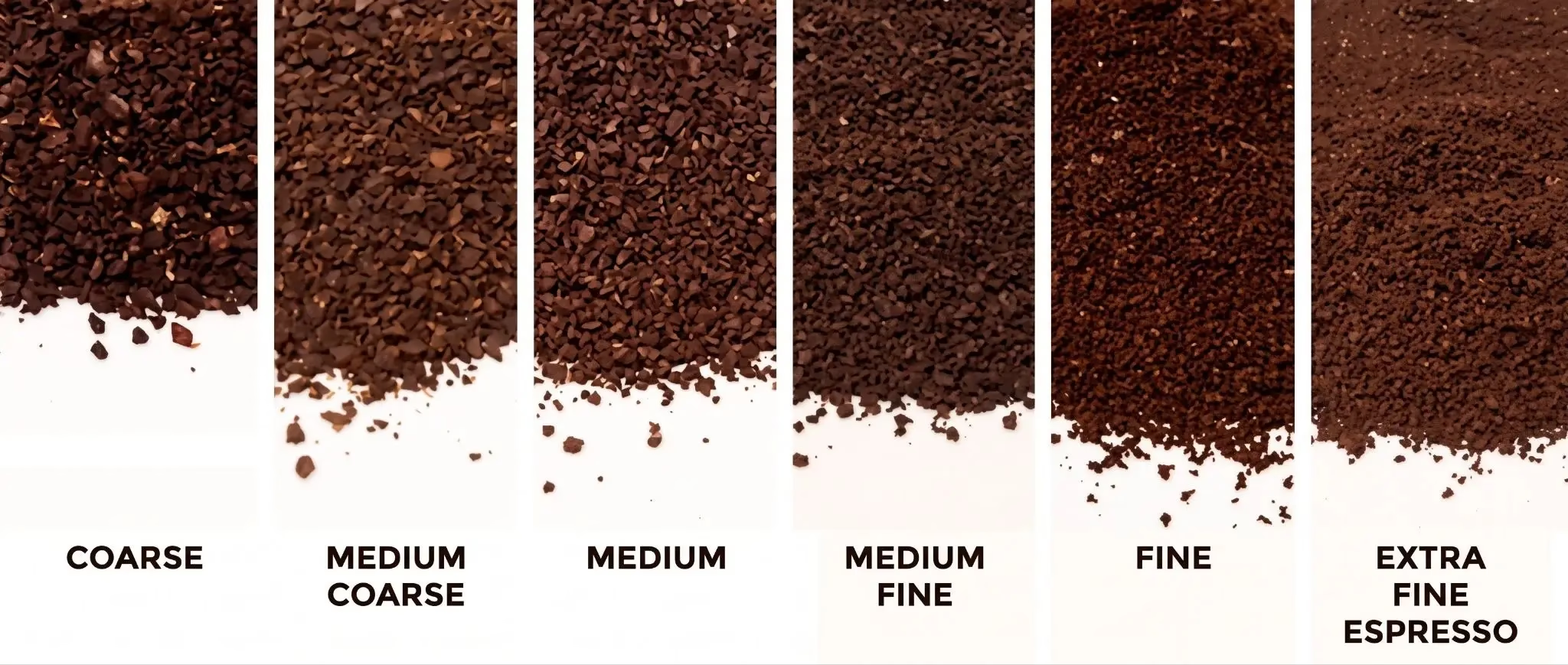
Coffee grind size is one of the biggest factors behind how a cup tastes, yet it is also one of the easiest variables to get wrong. You can use fresh coffee beans, a reliable grinder and the right brewer, but if the grounds are too fine or too coarse for the method, the extraction can fall out of balance.
Espresso needs a very different grind from a French press because water moves through each brewing method differently. This coffee grind size guide explains the best starting point for espresso, moka pot, V60, Chemex, Kalita Wave, drip coffee, Clever Dripper, French press and cold brew so you can dial in your grinder with more confidence.
Why Does Coffee Grind Size Matter?
Grind size changes how much surface area of the coffee is exposed to water and how easily water moves through or around the grounds. Finer particles expose more surface area and generally allow compounds to extract more quickly, while coarser particles expose less surface area and usually require longer contact with water.
That is why espresso relies on a fine grind during a short pressurized extraction while French press and cold brew can use much coarser coffee during longer immersion. Grind size also affects flow in methods such as espresso and pour-over, so the goal is not simply to grind finer for more flavor. The right setting needs to balance extraction, brew time and water flow for the method you are using.

What Grind Size Does Each Brewing Method Need?
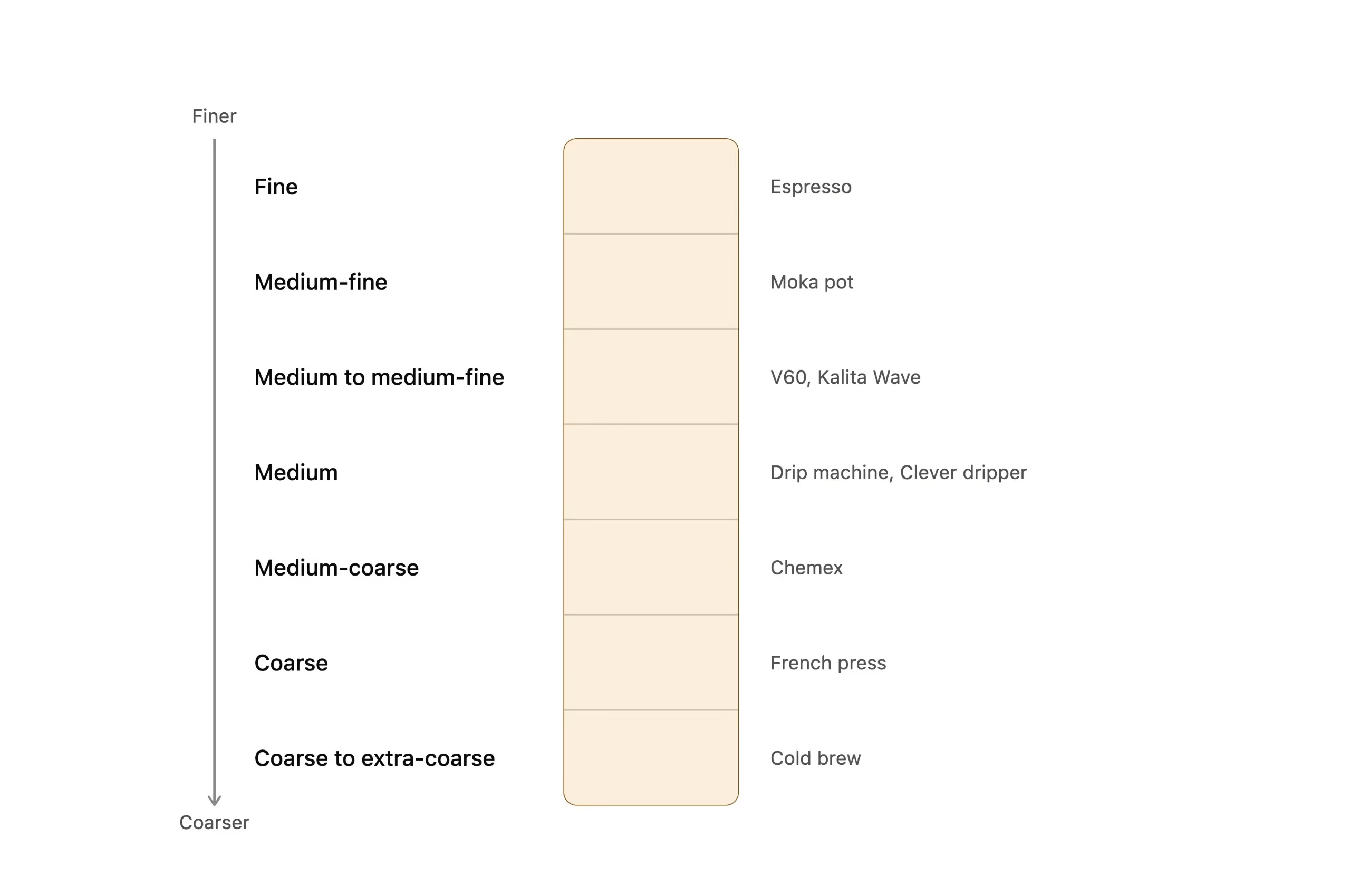
There is no universal grinder number for each brewing method because burr geometry, grinder calibration, dose and individual recipes all affect the final setting. These grind sizes are better used as starting points that you can adjust according to brew time and taste.
Fine grind: Espresso
Espresso generally needs a fine grind because pressurized water has only a short time to move through the coffee bed. Fine particles create the resistance and surface area needed for proper extraction, although the exact setting should still be adjusted according to how quickly the shot flows and how it tastes.
Medium-fine grind: Moka pot
A moka pot works best with coffee that is medium-fine, usually finer than standard drip coffee but slightly coarser than a true espresso grind. Steam pressure pushes water upward through the coffee basket, so grinding too fine can restrict flow and produce a harsh cup while grinding too coarse can leave the brew weak and thin.
Medium to medium-fine grind: V60 and Kalita Wave
V60 and Kalita Wave recipes commonly start around the medium to medium-fine range because water passes through the coffee bed over several minutes. A finer setting can increase extraction but may also slow drainage, while a coarser setting allows faster flow and can make the brew easier to control.
The ideal point depends on your dose, pouring technique and recipe, so use brew time and taste together rather than relying on texture alone.
Medium grind: Drip coffee machines and Clever Dripper
Automatic drip machines generally work well with a medium grind that allows water to pass through at a steady rate without draining too quickly. The Clever Dripper is more flexible because it uses immersion before releasing the coffee through a paper filter, but medium is still a useful starting point for most recipes.
If the finished cup tastes weak even when your ratio and brew time are consistent, move slightly finer. If it tastes overly harsh or the brewer drains unusually slowly, move slightly coarser.
Medium-coarse grind: Chemex
Chemex brewing usually calls for a medium-coarse grind, partly because its thicker paper filter can slow the flow of water through the coffee bed. Grinding too fine can make the brew stall and extend the drawdown while a grind that is too coarse may let the water pass before enough flavor has been extracted.
Start around a medium-coarse texture and adjust gradually according to your recipe rather than treating Chemex exactly like a V60.
Coarse grind: French press
French press typically uses a coarse grind because the coffee remains immersed in water for several minutes before the plunger separates the grounds from the finished brew. Larger particles also help reduce the amount of fine sediment that passes through the metal filter.
A grind that is unnecessarily fine can make the cup heavier, muddier and more difficult to plunge, so French press is usually better dialed in from the coarse end of your grinder.
Coarse to extra-coarse grind: Cold brew
Cold brew keeps coffee and water in contact for many hours, which gives extraction far more time than hot brewing methods. A coarse to extra-coarse grind helps keep the finished coffee cleaner and makes filtration easier after a long steep.
The exact setting can change depending on whether you are making ready-to-drink cold brew or concentrate, but there is usually little reason to grind anywhere near the fine settings used for espresso or moka pot.
4 Signs Your Grind Size Is Wrong
- Harsh, dry, or overly intense taste — usually means the grind is too fine. In pour-over and espresso, this slows water flow and increases extraction past balanced, pushing the cup toward harsh or dry.
- Thin, sharp, or underdeveloped taste — points the other way. The grind is likely too coarse, so water moves through too quickly to extract properly, leaving the cup tasting hollow.
- Muddy French press — often a too-fine grind, but not always. Steep time, agitation, and how many fines your grinder produces can all contribute, since immersion methods don’t have continuously flowing water.
- A reliable recipe suddenly tastes off — check the grind setting first. Changing several variables at once makes it harder to tell what actually caused the shift, or what fixed it.
- A usual setting stops behaving the same way — often means the grinder itself has drifted, not your technique. Calibration shifts and worn burrs change particle consistency over time.
How Do You Adjust Grind Size on Your Grinder?
Start with the manufacturer’s recommended range for your brewing method, brew your usual recipe and make only one grind adjustment at a time. Moving slightly finer generally increases extraction and can slow flow in percolation methods, while moving coarser generally reduces resistance and speeds the brew.
Manual grinders such as the Timemore Chestnut C3S use an adjustment mechanism that lets you move through different settings for espresso, pour-over and immersion brewing. Keep track of your starting position so you can return to a successful setting when switching between brewing methods.
Electric grinders such as the Timemore Sculptor 078S offer stepless adjustment, which is particularly useful when dialing in espresso because very small changes can noticeably affect shot flow. Its wider grind range also makes it practical for people who regularly move between espresso and filter brewing.
Commercial grinders such as the Mahlkönig EK43ST serve a different purpose because they combine a broad adjustment range with high grinding capacity and consistent particle production. A café using both espresso and filter coffee can therefore choose settings around its menu rather than treating the grinder as equipment for only one brewing method.
Struggling With Grind Size? Drop By at Roast Lab
Grind size takes a bit of trial and adjustment to get right, especially when you’re switching between brewing methods or trying a new bag of beans. That’s normal, not a sign you’re doing something wrong. If you’re not sure your grinder is giving you the control you actually need, come by and we’ll help you sort it out.
Whether it’s picking your first grinder or dialling in a recipe that’s stopped tasting right, we’re happy to work through it with you, cup in hand, until it clicks!
Frequently Asked Questions
What grind size is best for espresso?
A fine grind is the best starting point for espresso because it creates enough resistance and surface area for balanced extraction during the short, pressurized brewing process in most machines.
Why does my French press coffee taste muddy?
A coarse grind is the best starting point for French press because larger particles suit longer immersion, reduce excess sediment and make it easier to produce a cleaner, balanced cup.
Is V60 grind size the same as drip coffee?
V60 usually works around medium to medium-fine while automatic drip coffee generally starts around medium, although your recipe, dose and brewer design can shift the ideal grind setting slightly overall.
Can one grinder handle every brew method?
Yes, one grinder can handle every brew method if it has a wide adjustment range and consistent burr performance. High-quality grinders can switch between espresso, pour-over and French press while maintaining reliable results.
Does roast level change the ideal grind size?
Light roasts are generally less soluble and may benefit from a slightly finer grind while darker roasts often extract more readily and can sometimes taste better with coarser settings overall.


Leave A Comment